
History
The Evolution of an Idea
"I recognized the potential for wood to have these vibrations that I wanted to release into a place where we all could hear them, out in the air."
Carl began by following natural tree forms and wood grain, creating musical sculptures that explored how long and short elements, free and fixed ends, and their interactions changed vibration and sound.
1989
Random Rhythms
One of Carl's earliest named instruments — a large sculptural wooden idiophone that began to define the direction of his work. Random Rhythms followed the natural grain and shape of the wood, treating the material as a collaborator rather than a medium.
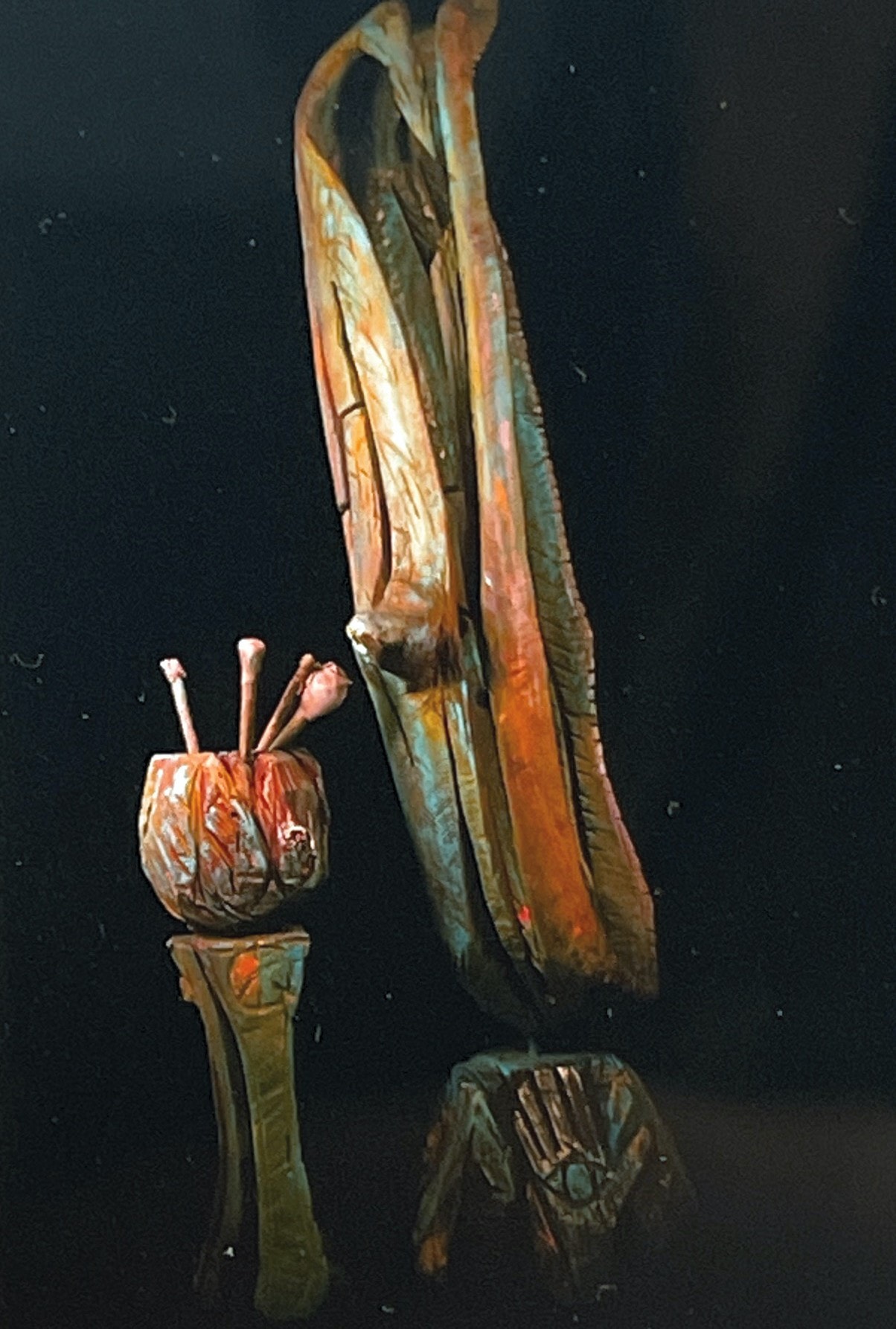
1989
Bana Ana
Developed in the same year as Random Rhythms, Bana Ana explored a different sculptural direction — a tall, twisting form with carved surface detail and a distinctive blue-toned finish with brass accents.
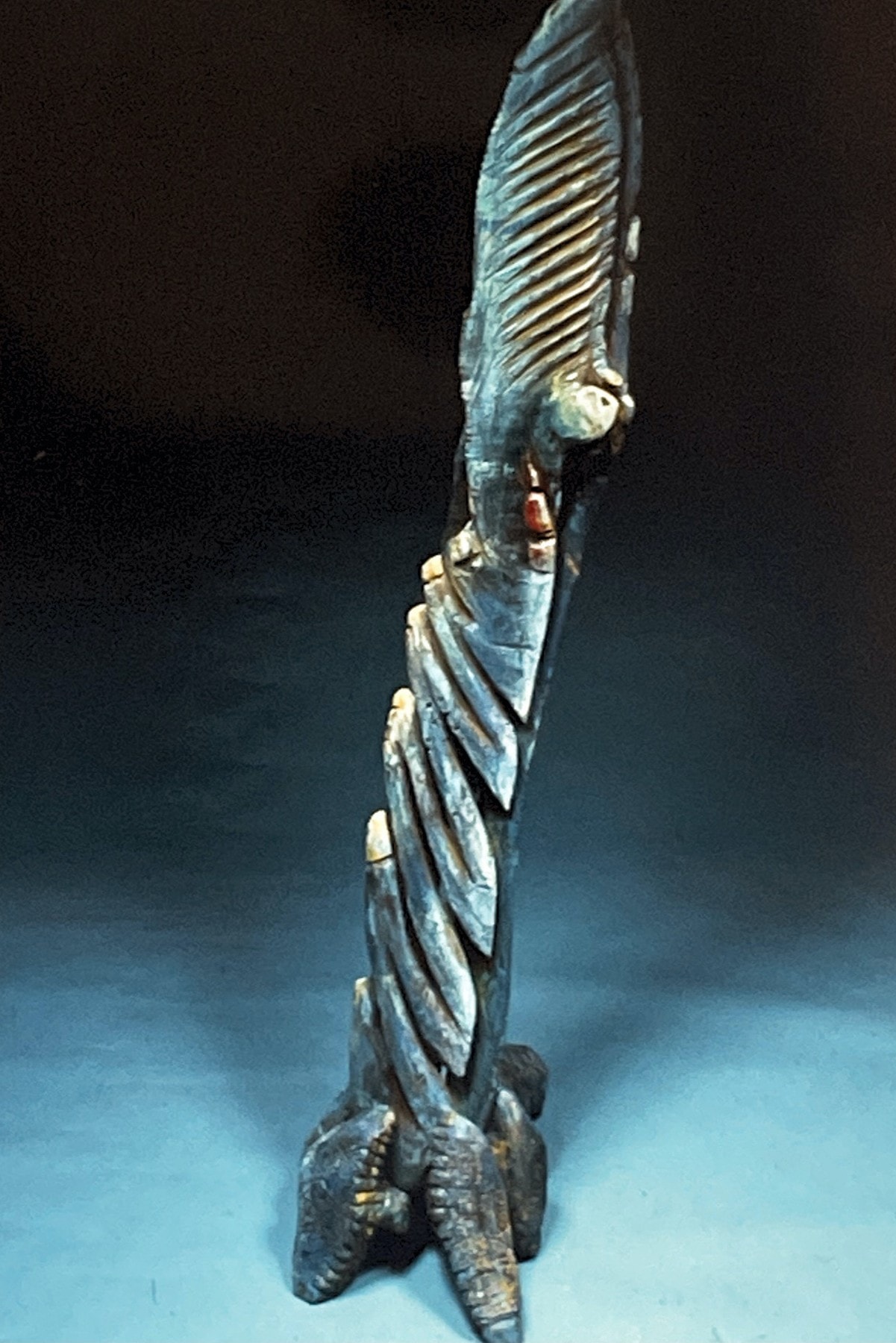
1989
Wind
The Wind was the instrument Carl brought to California when he met Les Barcus and John Berry of Barcus Berry. He experimented with their pickups and amplifiers using this instrument, and left with a hand-built brass U-shaped piezo transducer. The Wind became the first of his instruments to be amplified.
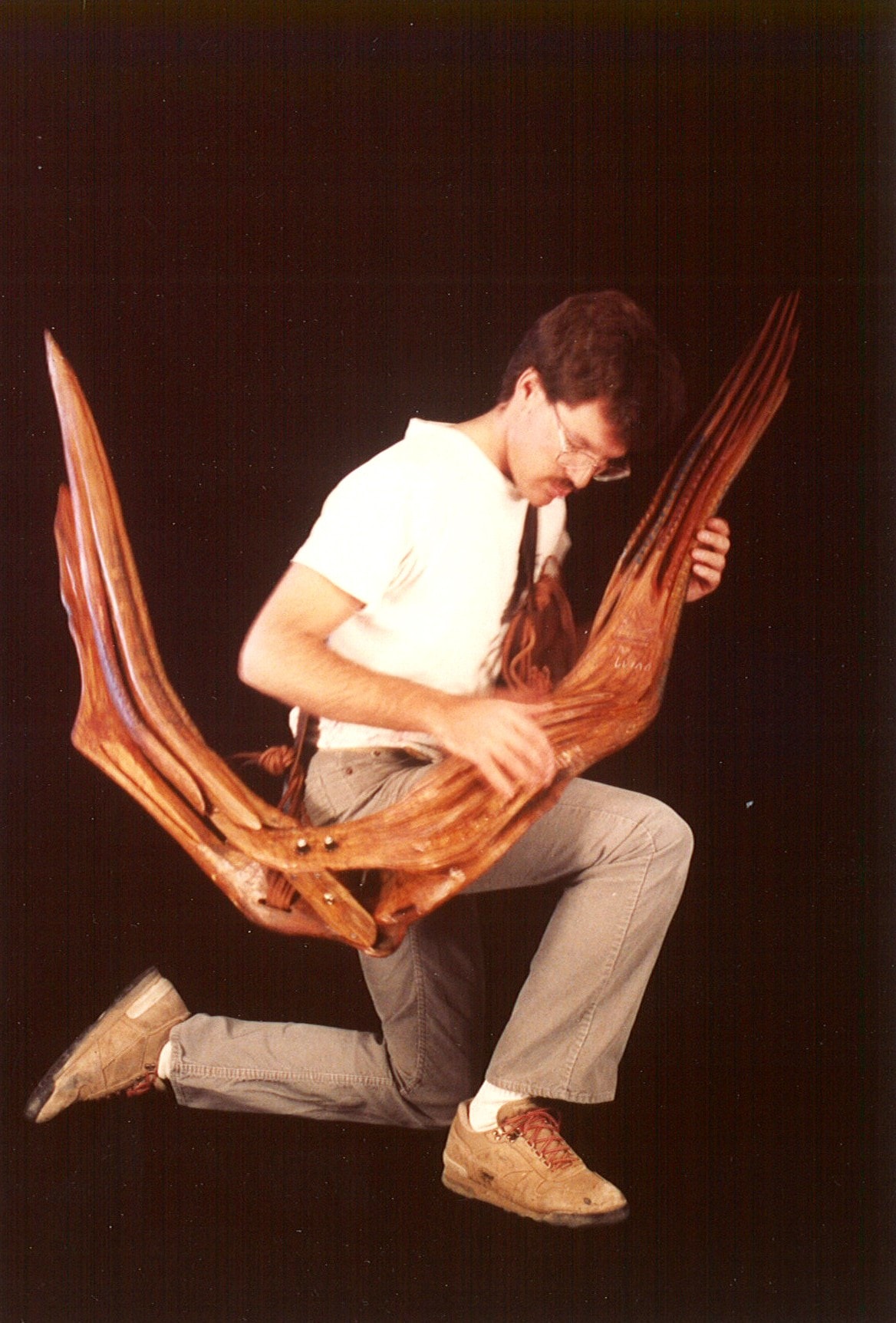
In 1989 Carl traveled to California seeking a pickup capable of capturing sounds he had unlocked from Colorado juniper. He met Les Barcus and John Berry of Barcus Berry Piezo Transducer/Preamp Systems, experimented with pickups and amplifiers using The Wind, and left with a hand-built brass U-shaped piezo transducer plus additional pickup sets. That trip transformed the instruments from acoustic sculptures into electro-acoustic instruments.
1992
Whailer
The early sculptures produced remarkable sounds but were cumbersome, inconsistent, difficult to tune, and difficult to play. The Whailer represented a step toward a more practical instrument — still sculptural, but beginning to address the ergonomic and acoustic lessons of the earlier work. Shown here in its custom leather case.
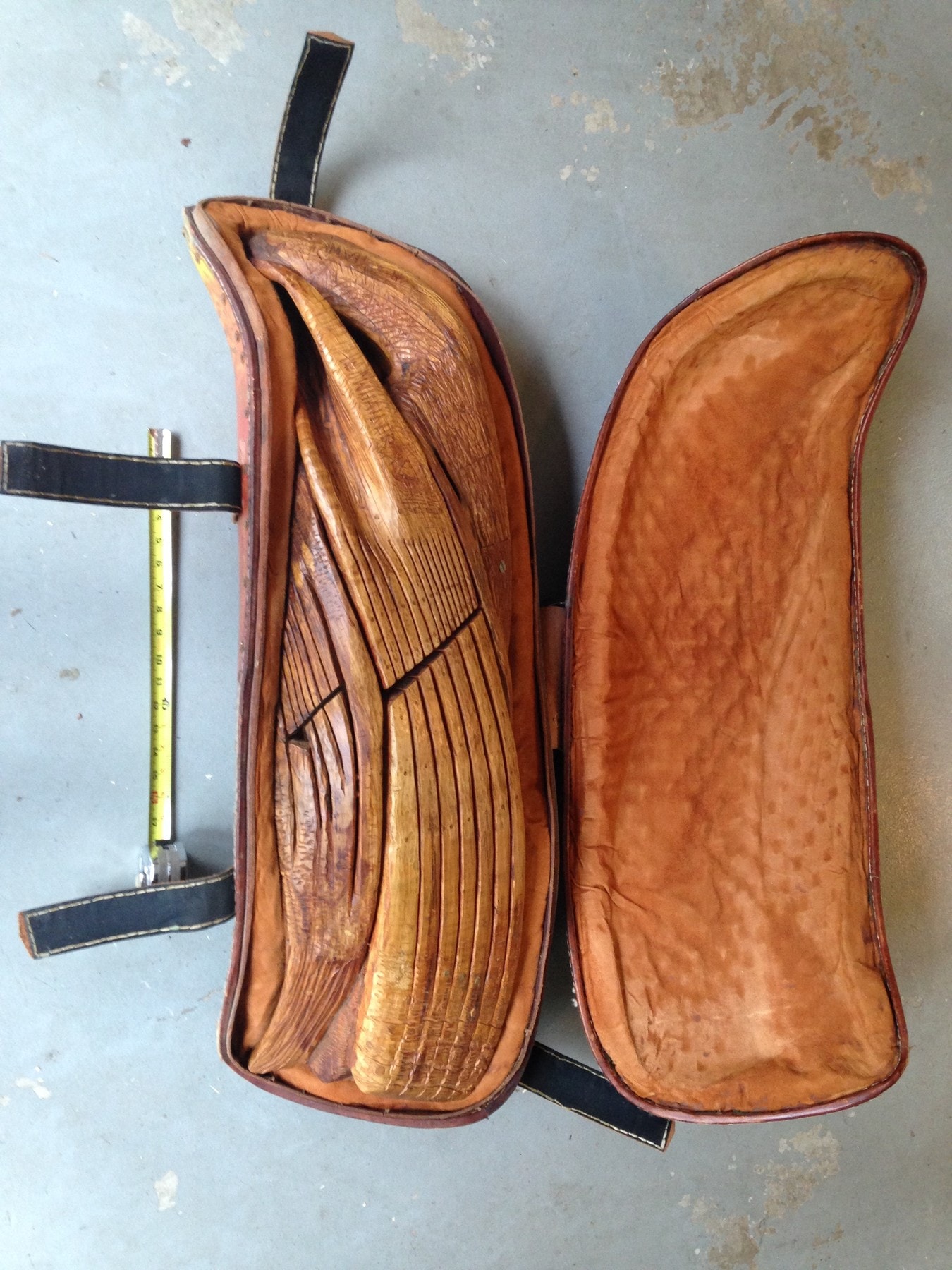
1993
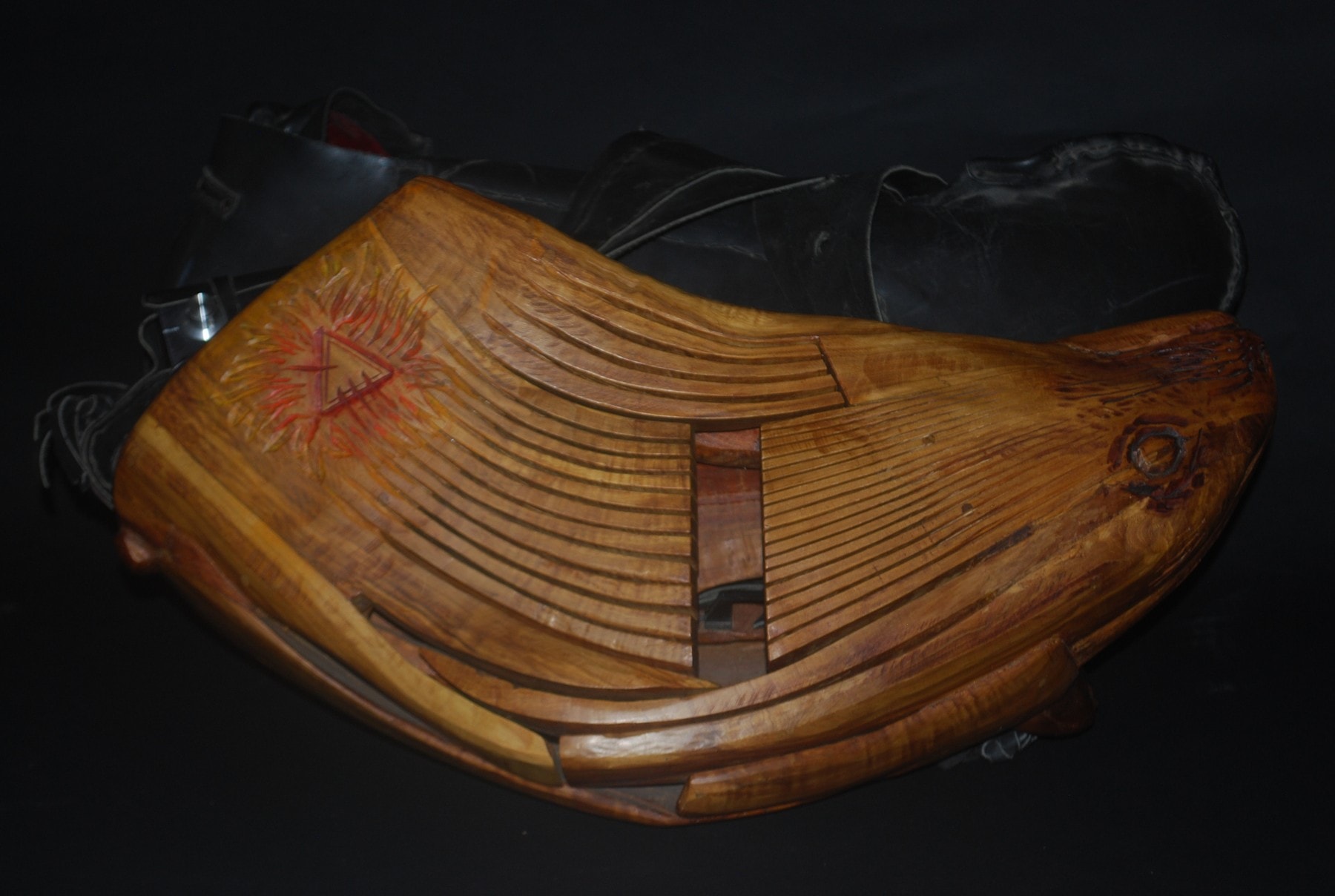
Burning Seal
Burning Seal continued the evolution of form and sound. Its curved body, carved surface markings, and warm wood tones reflect Carl's deepening understanding of how shape and material work together to produce a distinctive acoustic character.
2011
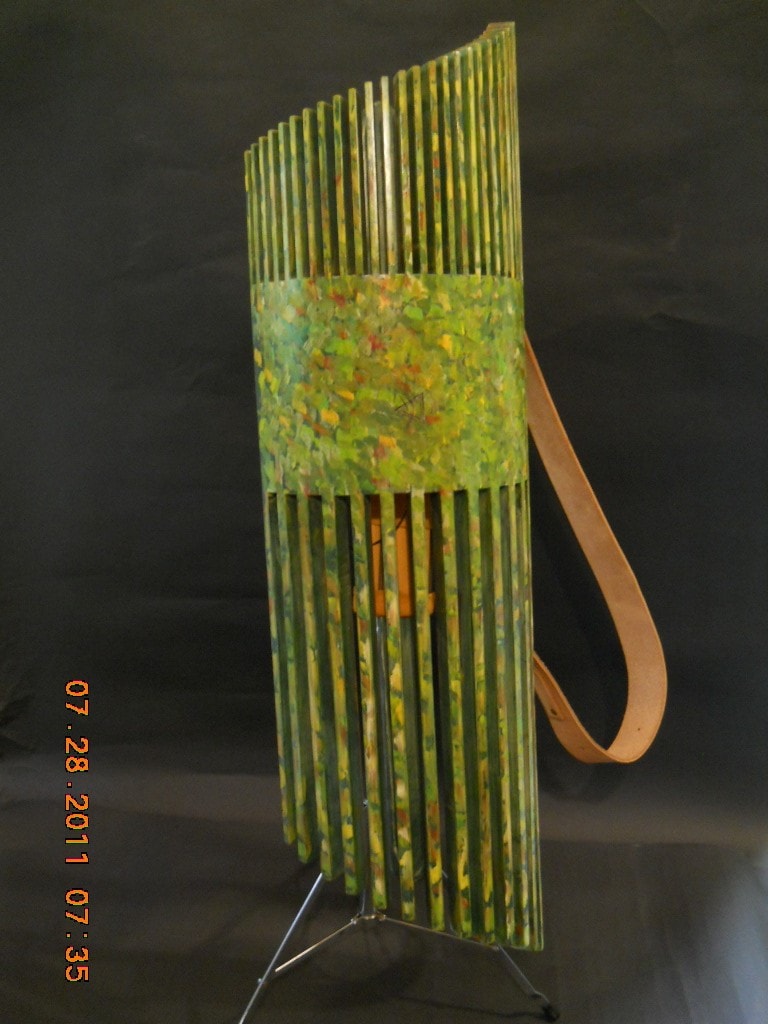
Vibe
Two decades of accumulated knowledge about wood, vibration, tuning, and ergonomics produced Vibe — a lighter, more portable instrument with a distinctive green-painted construction and leather strap. The vertical format and stand mount made it practical for a wider range of performance contexts.
2011
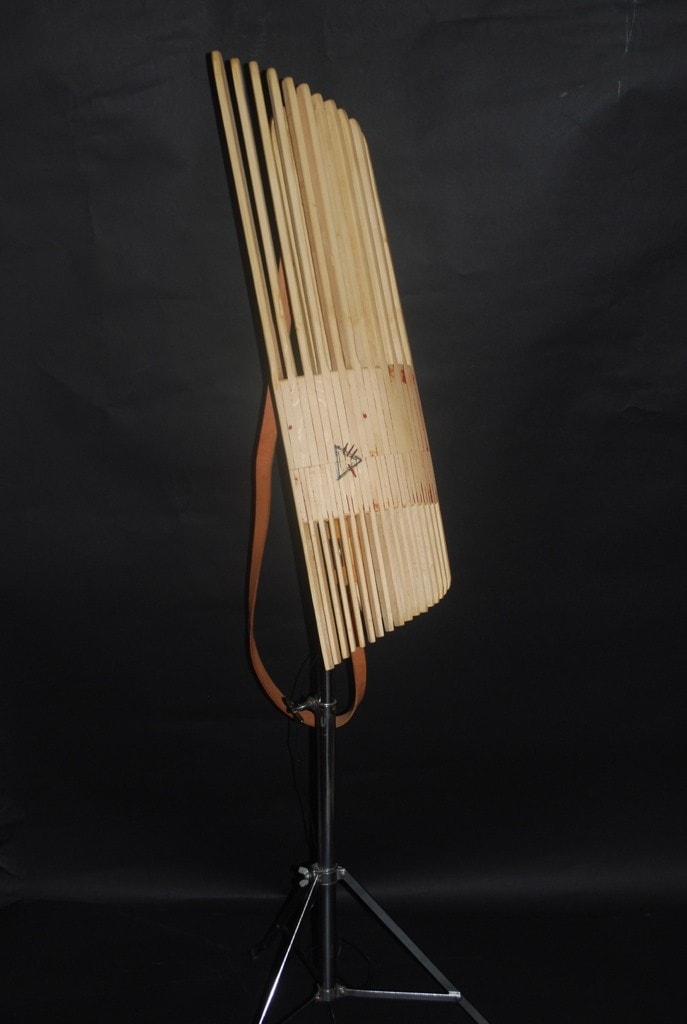
Element
Element, developed alongside Vibe, took a different direction — natural wood tones, leather strap, and metal hardware on a dark background. Where Vibe was colorful and vertical, Element was spare and direct.
2011
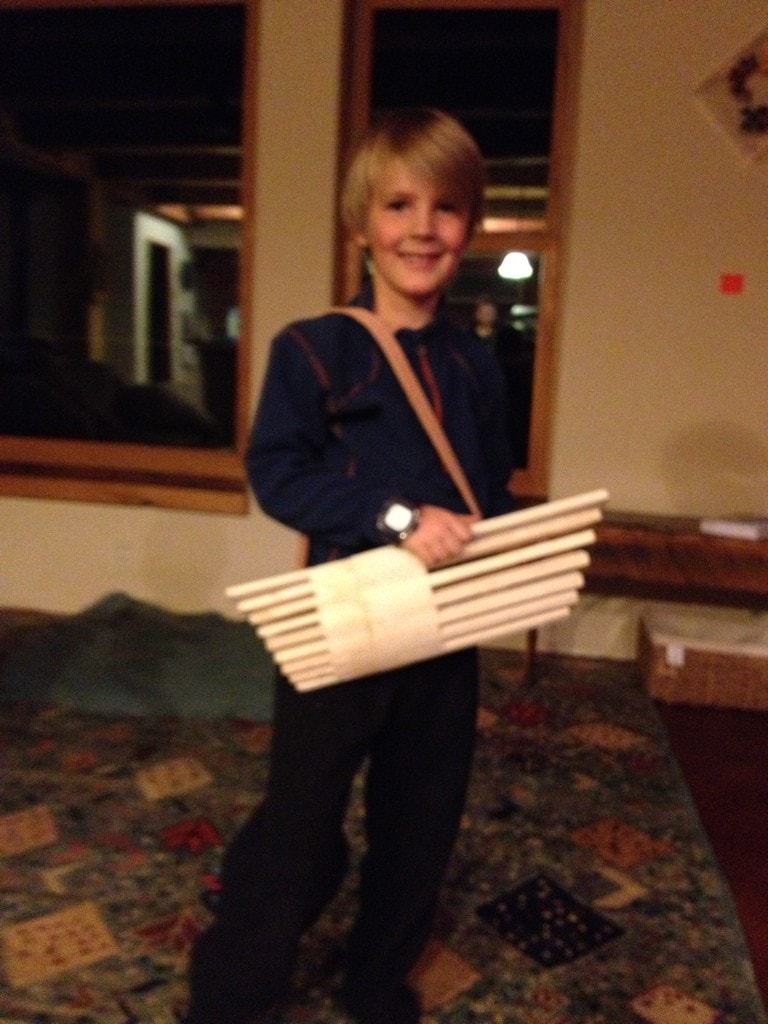
Mini Element
The Mini Element demonstrated that the instrument concept could scale down without losing its essential character — portable enough for a child to carry, still recognizably part of the same family.
2012
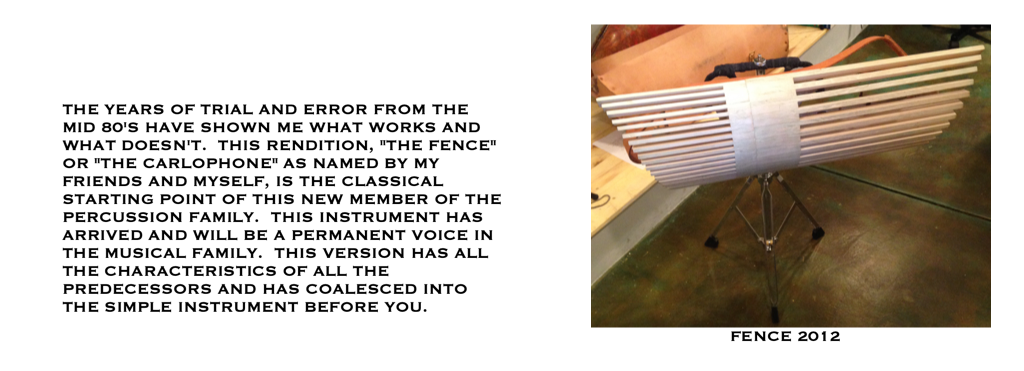
The Fence / Carlophone
Years of trial and error led to a lighter, tunable, portable, consistent, and reproducible instrument. Carl and his friends also called this rendition the Carlophone. It can be played standing, worn like a guitar, or set on a stand. Carl views the instrument as evolutionary rather than static — each version a step in an ongoing conversation between maker and material.
Carl views the instrument as evolutionary rather than static. Each version is a step in an ongoing conversation between maker, material, and sound.